Why Category 3 Demands a Different Response
Water damage gets classified by what is in the water, not by how much of it there is. A pinhole leak from a copper supply line dripping onto your subfloor is Category 1, clean water from a sanitary source. Once that same water sits for 48 to 72 hours, or runs through drywall and insulation, it becomes Category 2, grey water with elevated microbial load. Category 3 is the worst class. It includes sewage from the building drain or city main, rising groundwater that has contacted soil contaminants, toilet overflows containing fecal matter, and any flood water from rivers, creeks, or storm sewers. In Providence Green, the most common Category 3 calls we run are sewer line backups during heavy spring rain and failed ejector pumps in finished basements.
The reason this matters is liability and biology. Black water carries E. coli, hepatitis, rotavirus, giardia, and a long list of fungal spores. Walking through it in tennis shoes, then walking upstairs onto your carpet, spreads contamination through the rest of the house. Drying the water without removing contaminated porous materials does not fix the problem, it just hides it behind a clean-looking wall. Insurance adjusters know this, which is why proper documentation and IICRC-compliant work orders matter for your claim. If you want the broader picture on how restoration costs are built, our complete water damage restoration cost breakdown walks through the numbers line by line.
There is also a regulatory layer that homeowners rarely see until they read the contract. IICRC S500 governs water restoration in general, but Category 3 work intersects with OSHA bloodborne pathogen rules, state biohazard transport regulations, and local landfill acceptance policies. Providence Green Water Restoration crews handle this paperwork as part of the job, but it shapes everything from how a vacuum truck is loaded to which dumpster company will accept the debris. Cutting corners here is not just sloppy, it can void coverage and create downstream legal exposure if the home is sold within the next several years.
The Three Categories Compared in Detail
The table below shows how the response, the cost, and the salvageable materials shift as the category climbs. Read it carefully, because the most expensive mistake homeowners make is treating a Category 3 loss like a Category 1 cleanup.
| Factor | Category 1 (Clean) | Category 2 (Grey) | Category 3 (Black) |
|---|---|---|---|
| Source examples | Supply line break, ice maker, faucet, rainwater on clean surface | Dishwasher discharge, washing machine overflow, aquarium, sump pit seepage | Sewage backup, toilet overflow with solids, river flooding, standing water over 72 hours |
| Health risk | Minimal if dried fast | Moderate, can cause illness with skin contact or ingestion | Severe, contains pathogens, bacteria, and toxins |
| PPE required | Gloves, work boots | Gloves, N95, eye protection | Full Tyvek suit, respirator, nitrile gloves, rubber boots, eye protection |
| Containment | Usually none | Plastic sheeting at room boundaries | Negative air containment, HEPA filtration, decon zones |
| Carpet | Often salvageable with extraction and drying | Pad replaced, carpet sometimes saved | Carpet and pad removed and disposed as biohazard |
| Drywall | Dried in place if dried under 48 hours | Flood cuts at 12 to 24 inches above water line | Flood cuts at 24 inches minimum above contamination line, often higher |
| Insulation | Sometimes saved if cellular foam | Removed if wet | Always removed and bagged |
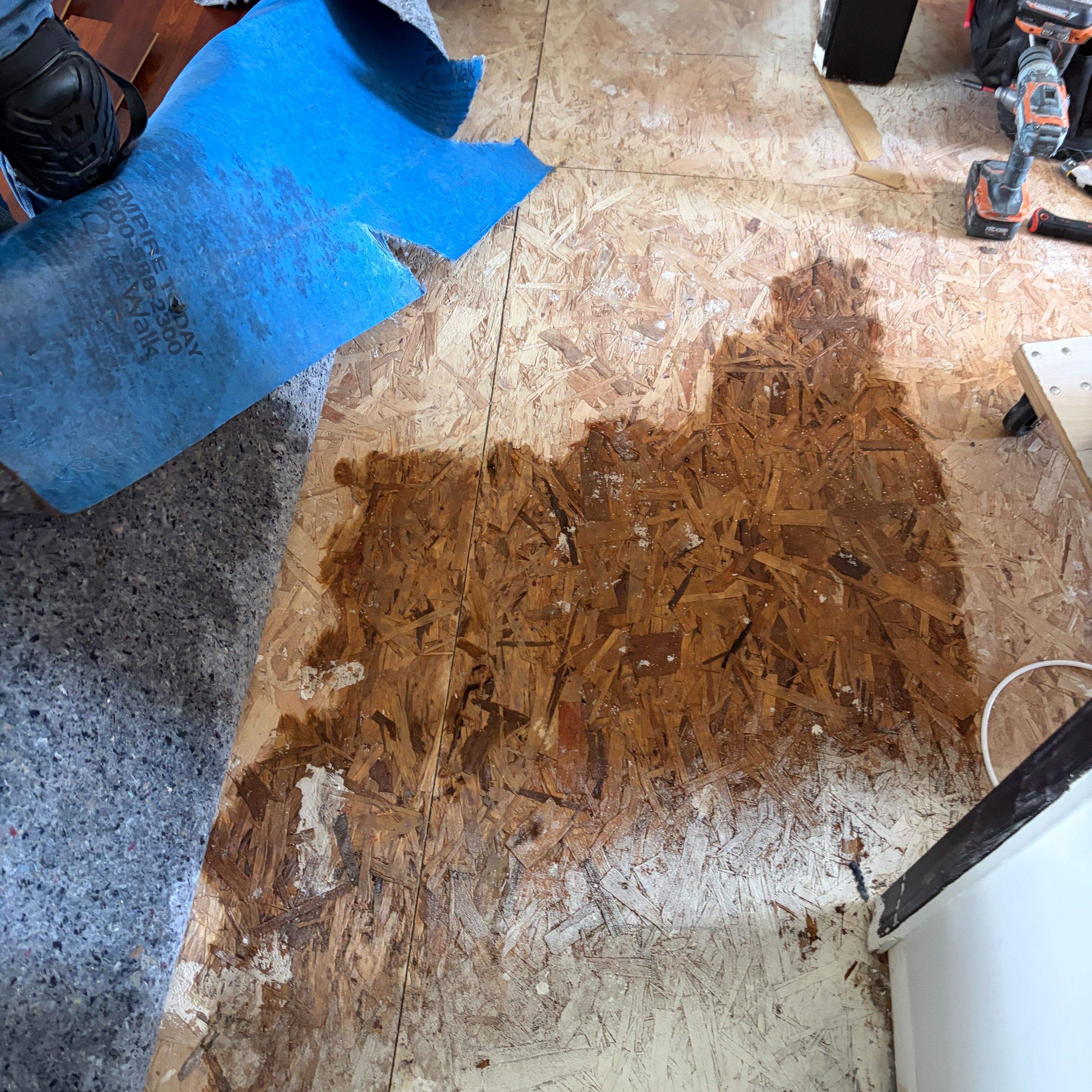
| Subfloor | Dried in place | Dried, sometimes sanded | Cleaned, sanitized, and often replaced if OSB or particleboard |
| Antimicrobial treatment | Optional | Recommended | Required, often two applications |
| Average Providence Green cost range | $1,200 to $4,500 | $3,500 to $9,000 | $7,000 to $25,000+ |
| Typical timeline | 3 to 5 days | 5 to 9 days | 7 to 21 days |
| Insurance coverage | Usually covered if sudden | Usually covered if sudden | Covered under sewer backup rider, not standard policy |
What the Comparison Means for Your Home
The cost gap between a Category 1 and Category 3 loss is not arbitrary. It reflects real labor hours in PPE, biohazard disposal fees, additional antimicrobial chemicals, and the volume of material that has to come out of your home. A 600 square foot finished basement with three inches of sewage takes our crews two to three days just for the removal and disinfection phase, before any drying equipment goes in. That is roughly 40 to 60 labor hours plus disposal, equipment, and reconstruction prep.
Material selection inside the home also drives the final bill in ways homeowners do not anticipate. Engineered hardwood and laminate planks almost always come out in a Category 3 loss because the fiberboard core wicks contamination and cannot be effectively sanitized. Solid hardwood sometimes survives if the sewage was caught quickly and the subfloor underneath is plywood rather than OSB. Cabinetry presents a similar split. Particleboard boxes swell and harbor bacteria, while solid wood face frames can often be cleaned, dried, and reinstalled. Providence Green Water Restoration field techs document each material decision with photos and moisture readings so the adjuster sees the reasoning, not just the line item.
The insurance piece deserves attention. Standard homeowner policies in Indiana exclude sewer and drain backup unless you carry the specific endorsement, often called a water backup rider, with coverage limits of $5,000, $10,000, or $25,000. If your loss exceeds the rider limit, the gap comes out of pocket. We help document the loss with photos, moisture maps, and IICRC-compliant scope of work so adjusters approve what should be approved. For specific scenarios like a toilet overflow Category 3 cleanup or a flooded basement from a backed-up floor drain, the documentation requirements get even more specific. If the loss started in a finished basement, our basement flooding service page explains the full restoration path from extraction through reconstruction.
The single biggest determinant of cost and timeline is how fast you call. Every hour that sewage sits in contact with drywall, baseboards, and subflooring expands the demolition scope. A four-hour response and a 24-hour response can be the difference between a $9,000 job and a $22,000 job on the same square footage. Providence Green Water Restoration dispatches a Providence Green crew with extraction trucks, antimicrobial supply, and containment materials on the first roll, so the assessment and the mitigation start in the same visit rather than days apart.